Building the Cooperative Economy: Insights from the Next Generation of Leaders

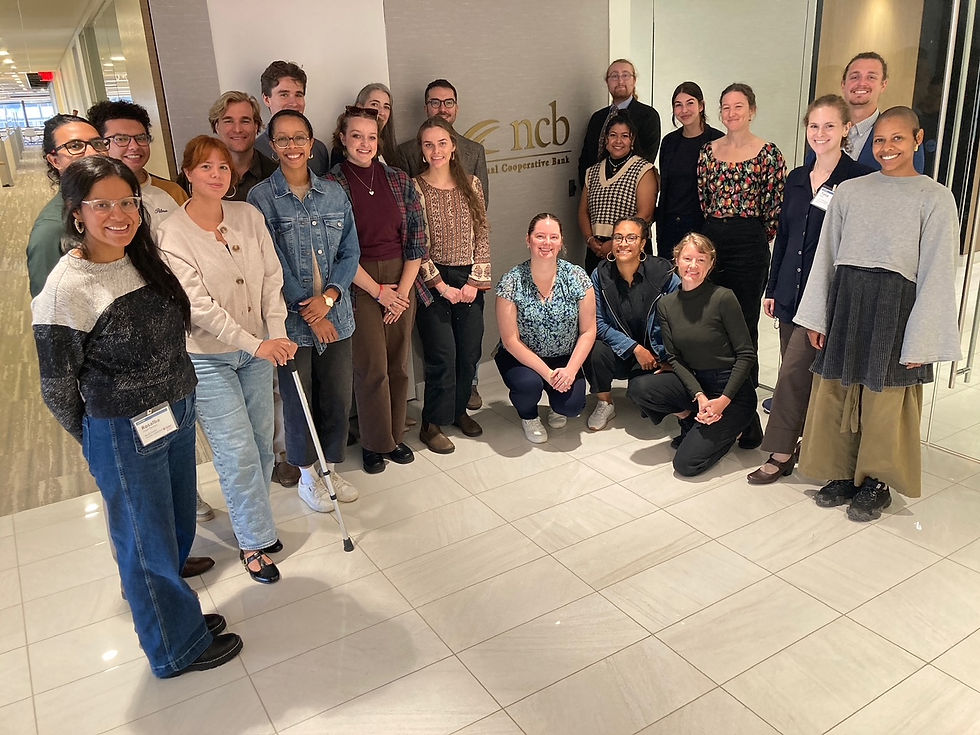
Earlier this month, cooperators from around the country gathered in Washington, DC, for U.S. Co-ops' IMPACT Conference and the Cooperative Development Foundation’s Cooperative Hall of Fame. Among them were 21 Cooperative Leaders & Scholars (CLS), who were nearing the end of CDF’s eight-month fellowship.
Opening the Cooperative Hall of Fame, CDF Chair John Holdsclaw IV reflected on how the week begins with emerging cooperative leaders presenting their fellowship capstones and concludes by honoring cooperative heroes whose careers have made a lasting impact. These bookends illustrate how the cooperative community continually evolves and renews itself as new generations join more established cooperators in developing cooperative solutions to community challenges.
CDF’s CLS Fellowship equips emerging cooperative leaders through cross-sector education, professional networks, and engagement with thought leaders and policymakers. Throughout the eight-month program, fellows develop individual or group capstone projects that apply their learning to real challenges and opportunities. CDF connects fellows with experts, organizations, and resources across sectors and geographies to strengthen their projects and expand their networks. This year's capstones offer a glimpse of the ideas and innovations shaping the cooperative movement's future.
Co-op Outreach, Member Value and Identity
How can we ensure that more people have access to the cooperative model, which combines shared ownership and democratic governance, and how can we strengthen cooperative identity? Fellows explored efforts to engage young people, strengthen member participation, and sustain cooperative identity as organizations grow.
Two capstones focused on youth engagement in cooperatives. One compared the U.S. cooperative movement with those in Latin America, while another explored Farmers Union camps as an important avenue for engaging young people in co-ops and highlighted the opportunity to build a partnership with FFA.
On member value, one fellow found that community connections were a primary benefit, with member dividends seen as “frosting on the cake.” Another explored how producer co-ops provide a wide array of clear and practical supports to members, from crop management inputs to marketing and sales, and offer a trusted path to scale for smaller producers.
Several fellows explored the challenge of sustaining cooperative identity, democratic participation, and community ties as co-ops and credit unions grow. Proposed solutions included stronger member education, incorporating cooperative values into hiring and leadership development, and partnerships with sector associations.
Cooperative Support: Education, Development, Research and Lending
Cooperative Principle 5 calls on cooperatives to invest in education, training, and information. Fellows explored how to strengthen the infrastructure that makes cooperative development possible – from accessible education and technical assistance to capital and research that informs practice.
One fellow created a prototype of a web-based tool to help cooperators navigate available education and training opportunities.
Other projects explored how community organizing, research, and cooperative development can work together to help communities address shared needs and build new cooperative sectors.
A group project explored cooperative financing for creative arts and community gathering spaces: working directly with artists, these fellows developed a model combining residential and commercial space.

Cooperative Ecosystems
What makes a cooperative economy strong? Is it the number of co-ops, their connections to one another, or the broader environment that enables them to thrive? Fellows explored the policies, narratives, relationships, and infrastructure that support cooperative ecosystems.
Two fellows addressed co-op supportive policy: one documented how cooperatives can advocate for policy change by utilizing storytelling, demonstrating impact on constituents and mobilizing professional associations, while the other looked at the economic development policies, such as business licensing, zoning, tax relief and direct subsidies, that local governments can use to support resident owned businesses.
Others looked at how communities are oriented to narratives of collectivism and how these take shape and benefit communities locally—from cooperative enterprise, to mutual aid following disasters, to free stores, time banking and other sharing economy models.
Several projects examined what helps cooperative networks and ecosystems take root, highlighting organizations that intentionally build trust, make connections, and have clear approaches to decision-making and conflict resolution. Multiple fellows also noted the importance of greater public visibility for co-ops, and one group developed a model for recognizing businesses in Puerto Rico's social and solidarity economy, helping consumers and businesses make more informed purchasing decisions.

Looking Ahead
Together, these capstones reflect the passions and perspectives of a new generation of cooperative leaders. They also reinforce an important lesson: growing a cooperative economy requires more than launching individual businesses. It takes engaged members, strong leadership, accessible education and capital, supportive policies, and connections across sectors and communities.
For some fellows, these projects mark the culmination of their eight-month fellowship. For others, they are the beginning of longer-term initiatives that will continue to evolve within their organizations and communities.
Applications for the 2027 Cooperative Leaders & Scholars Fellowship open soon. We encourage emerging cooperative leaders and scholars to apply—and invite others to recommend promising candidates in their networks.
To learn more, please read about the fellowship or contact CDF Deputy Director Kirstie Boyette at kboyette@cdf.coop.


Comments