The Values that Connect Us

We at CDF started off this month full of co-op pride. 350 people across the country showed up – virtually and in-person in Washington DC – to participate in our annual Do Well to Do Good Co-op 5K. The runners and walkers represented different generations, geographies and co-op sectors, but they all came together to show their support for the cooperative businesses that enrich our lives and communities. This has me reflecting on what it means to be part of this unique community.
The Statement on the Cooperative Identity, developed by the International Cooperative Alliance, defines cooperatives as autonomous groups of people “united voluntarily to meet their common economic, social and cultural needs and aspirations through a jointly owned and democratically-controlled enterprise.”
The versatility of the co-op business model is striking: producers, consumers and workers apply the model in any and every sector of the economy – from agriculture to banking, health care to housing, utilities to transportation – and this variety is matched by the diversity of the cooperators who form and guide these co-ops.
So with all of this variation, what is it that builds a unified cooperative identity?
As ICA makes clear, it is more than the business model that brings us together: it is the cooperative principles and values that connect all cooperatives in a common identity.
Cooperatives are rooted in:
democratic decision-making;
inclusion and opportunity;
education, self-determination and self-help;
economic responsibility and shared prosperity;
cooperation and mutual aid;
equality and equity; and
concern for community.
Across all types of co-ops, large and small, these businesses center people in their business practice.
These are challenging times: we have never been lonelier as a nation; we often feel helpless in the face of economic transformation; and we yearn to contribute rather than simply consume.
But cooperators have found the antidote for these anxieties. Cooperatives bring us together in community with others, allow us to solve problems and take charge of our future, and encourage us to be our best selves.
Cooperative values come to life as cooperators listen to each other and practice the art of compromise. When they collaborate to overcome hardship and make decisions together about community resources. When they share risk and lighten the burden for others. When they desire to see others do well and share resources and expertise. This is the cooperative identity that connects and inspires people.
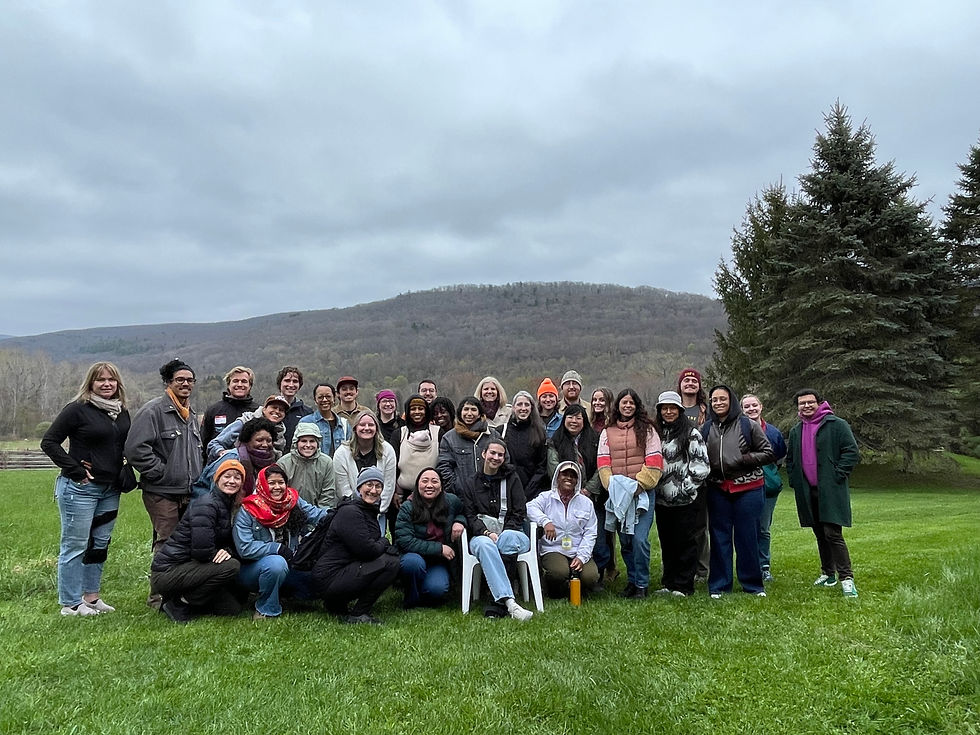
I was reminded of this recently when CDF toured the Hudson Valley and New York City with a group of new and emerging cooperative leaders and scholars embarking on an eight-month learning journey together. As they visited cooperative farms, grocery stores and restaurants, explored the history and opportunities of cooperative housing, heard from co-op lenders, and learned from worker owners and the co-op networks supporting them, the group quickly recognized – in each other and the cooperators we visited – the common values that brought them to this business model. Whether representing credit unions or agriculture co-ops, artist co-ops or rural electrics, the sense of shared identity was palpable by the time we were heading home at the end of the week.

We welcome you to help us foster cross-sector co-op pride, build cooperative capacity, and invest in values-based leadership. If the cooperative values and principles resonate, help us share this model with others. When friends or neighbors note challenges they’d like to fix, let them know they can join with others to create a cooperative solution. When students are curious about possible career paths or housing options, make sure they know that cooperatives offer an alternative. And when you encounter a cooperator who deeply inspires you, make sure their story is shared by nominating them to the Cooperative Hall of Fame.
Together we can build the society we want to live in – with self-determination, shared prosperity, and ongoing cooperation.

From the Desk of the Executive Director
Julie Bosland is a results-driven executive with over 25 years of experience helping public, nonprofit and business leaders expand economic opportunities and build strong communities. As executive director of CDF and senior policy advisor to NCBA CLUSA, the apex organization for US co-ops, she supports co-ops and co-op developers nationwide. Previously, Julie served in senior leadership roles within Living Cities, Think Shift (an initiative of The DeBruce Foundation), National League of Cities, and in federal and local government. A graduate of Swarthmore College, Julie earned her Master of Public Affairs from Princeton University and in 2024 earned INP’s Certificate in Nonprofit Practice.


I really enjoyed reading this content. Thank you for providing such unique and useful information. Your point of view is excellent, and I fully agree with what you've shared. Thanks for sharing your thoughts with us! Ernie Clement Hockey Jersey
The content was truly engaging and informative. I sincerely appreciate you for sharing such valuable insights. You made an excellent point, and I completely agree with your perspective. Thank you for contributing this helpful information. Glock Hoodie
The idea that co-ops can fight loneliness really hit home for me. It is nice to see so many different people coming together for a common goal, and that colony flow gives me hope for my own community.
I recently read about the material science involved in the project hail mary 2026 outfits, and it's genuinely impressive. The textile engineers apparently developed a graphene-infused weave that conducts heat away from the body instantly. This prevents the clammy overheating common in older EVA suits. Beyond space travel, I can see this cooling technology revolutionizing summer activewear and sportswear. Marathon runners and cyclists would benefit enormously from this innovation. It's amazing how space exploration keeps gifting us with practical everyday advancements.